
START Triage Integration with 911 Dispatch Centers
Picture the moment a 911 dispatch center takes the first call about a multi-vehicle pileup on the interstate. Within seconds, that dispatcher is juggling caller panic, incomplete information, and the need to get resources rolling before anyone even knows how many patients there are. What happens next, on scene, depends heavily on what happened in that call. The link between dispatch and triage is where most mass-casualty responses either come together or fall apart.
Dispatchers aren't just answering phones. They're the first filter on a chaotic event, and the decisions made in those first ninety seconds shape everything that follows: how many units roll, what kind of response gets staged, and whether the responders arriving on scene have any sense of what they're walking into. When that information flow breaks down, START triage teams end up reconstructing the scene from scratch instead of building on what dispatch already knew.
That's the gap START triage was built to close on the ground, and it's also where we've spent a lot of time thinking about integration. Andres Price has written before about how the same coordination challenge plays out with other agencies in our piece on multi-agency system integration in law enforcement response, and dispatch is really the front door to that whole coordination problem. Get the dispatch handoff right, and the rest of the incident tends to run smoother.
What Is Central Dispatch, and Why Does It Matter for Triage?
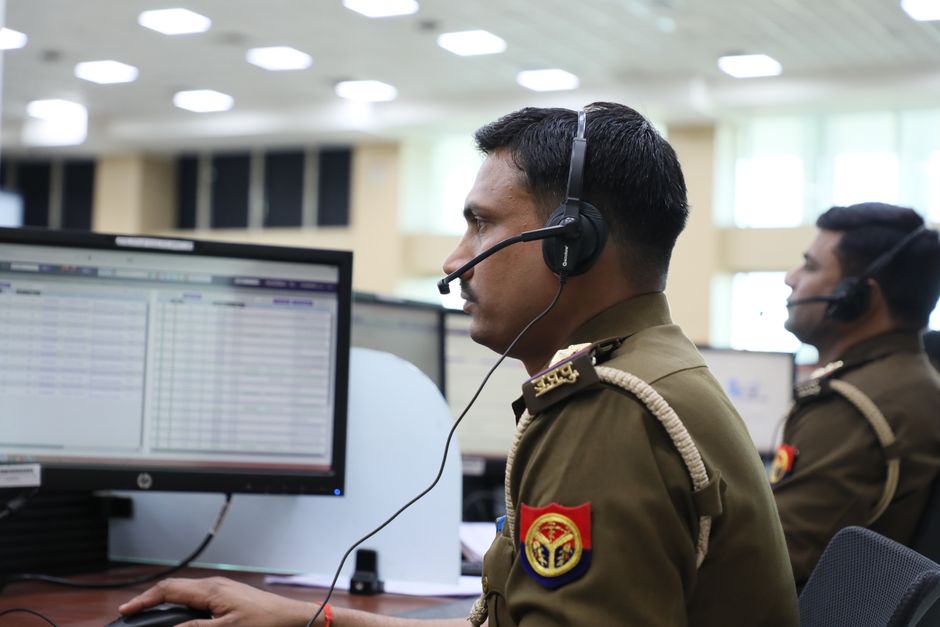
Central dispatch is the coordination hub, usually a Public Safety Answering Point, that receives 911 calls, gathers information, and directs fire, EMS, and law enforcement resources to an incident. For mass-casualty events, central dispatch does more than send trucks. It starts building the incident picture before a single responder arrives.
That picture matters more than people outside emergency services usually realize. According to the CDC's guidance on mass casualty event preparedness, effective triage and resource allocation during a mass-casualty incident depend on early, accurate situational awareness, meaning the sooner responders know approximate patient counts and mechanism of injury, the faster they can match resources to need. Dispatch is where that awareness starts. A caller reporting "multiple people down" after an explosion generates a very different response than a single-vehicle crash, even before anyone on scene has laid eyes on a patient.
In our experience training departments, dispatch protocols work best when they're built around the same vocabulary responders use once they're triaging. If dispatch says "mass casualty" and command staff hear "possible mass casualty," those are two different staffing decisions. Consistency in language between the call center and the field isn't a nicety. It's what keeps the first wave of units from being under-resourced.
911 Dispatch Guidelines: What Should Happen Before Units Arrive?
Good 911 dispatch guidelines for a suspected mass-casualty event call for early escalation, structured questioning to estimate patient count and hazard type, and immediate notification of incident command protocols so responding units know a MCI response, not a routine call, is in progress. This sets the tone for everything downstream.
The structured questioning piece is where a lot of the value lives. A trained dispatcher working a suspected mass-casualty call isn't just asking "what's your emergency." They're working through a script designed to extract the details responders actually need: approximate number of patients, whether the scene is safe to approach, whether there's an ongoing hazard like fire, structural collapse, or an active threat. That information gets relayed to responding units en route, so the first-arriving officer or medic already has a working hypothesis before they step out of the rig.
We've seen departments where dispatch guidelines stop at "send the closest units" and don't include an MCI branch at all. That's a gap. When dispatch doesn't distinguish a mass-casualty call from a routine one early, the response scales up late, and scaling up late during a mass-casualty incident is exactly the kind of delay START was designed to counteract once responders are on scene. You need a system that is easy to learn, easy to remember and easy to use, and that principle should extend backward into how dispatch flags and escalates these calls in the first place.
Sample 911 Call Script: How Do Dispatchers Structure the Call?
A sample 911 call script for a mass-casualty event typically opens with location and nature of emergency, moves into a rapid patient-count estimate, hazard and scene-safety questions, then caller-guided first aid instructions if trained responders are still minutes out. The goal is maximum information in minimum time.
A well-built script isn't rigid. It's a decision tree. If the caller says "explosion," the dispatcher branches into hazard questions: is there fire, is there smoke, is the caller able to safely move away. If the caller says "car accident, several people hurt," the branch shifts toward patient count and whether anyone is trapped. Either way, the dispatcher is building a profile that gets relayed to command staff before boots hit the ground. That profile is the seed of the incident action plan, and it's why the phrase "911 disaster" call handling gets treated as its own category in a lot of dispatch training curricula rather than folded into general call-taking.
"Rapid, accurate information exchange between the public and emergency dispatchers, and between dispatchers and responding units, is one of the most critical determinants of outcome in the earliest phase of a mass casualty response."
What a 911 Dispatcher Cheat Sheet Should Cover for MCI Calls
A 911 dispatcher cheat sheet for mass-casualty incidents should be a quick-reference card, not a manual. It needs to fit on a single page or screen so a dispatcher under pressure can scan it in seconds rather than search through pages of protocol during an active call.
What belongs on that card:
- Trigger criteria for declaring a suspected MCI (patient count threshold, mechanism of injury flags)
- Immediate notification chain: who gets alerted and in what order
- Standard questions to extract patient count, hazard status, and scene access
- Pre-arrival instructions for callers, including bystander first aid guidance
- Staging location protocol so incoming units don't converge on the same choke point
- Radio designation or call sign convention for the incident once it's declared an MCI
- Reminder to relay updated patient counts as additional calls come in
That last point matters more than it sounds. Dispatch centers often take multiple calls about the same incident, and each one can add or correct information. A cheat sheet that reminds dispatchers to consolidate and relay updates, rather than treating each call as isolated, keeps the picture responders are working from current instead of stale by the time the first ambulance arrives.
911 Protocol During an Active Mass-Casualty Response
911 protocol for an active mass-casualty response generally follows a tiered escalation: initial call intake, MCI declaration once threshold criteria are met, resource mobilization based on estimated patient count, and ongoing coordination between dispatch and incident command as the scene develops and more accurate numbers come in.
Once units are on scene, the character of dispatch's role shifts. It's no longer just about sending resources, it's about supporting the responders who are now triaging. This is where the connection to on-scene triage becomes direct. Responders using the START system are trained to move through patients fast: check respirations, perfusion, and mental status, and tag accordingly. After initial training rescuers can triage each victim in 60 seconds or less, but that speed only pays off if dispatch has already gotten enough resources moving that there are enough hands to act on the tags once they're assigned.
We've heard from fire captains who describe the frustrating scenario where triage moves fast, tags go up, and then there aren't enough transport units staged because the initial dispatch call underestimated patient volume. That's not a triage failure. That's a dispatch-to-field communication gap, and it's exactly the kind of seam that departments should be drilling on, not just assuming will work itself out during an actual incident. If your department wants a closer look at how these training gaps get identified and closed, our FAQ page covers some of the most common questions we get from agencies building out their MCI protocols.
911 Dispatch PDF Resources and Practice Materials
A 911 dispatch PDF resource, whether it's a downloadable protocol reference, a training script, or a quick-reference card, gives dispatch centers a standardized document they can print, laminate, and keep at every workstation. These are especially useful for smaller PSAPs that don't have a dedicated MCI training officer.
The value of a PDF over an app or intranet page is availability. Systems go down. Networks lag. A laminated card taped next to the console doesn't depend on connectivity, and during a genuine communications overload event, that redundancy matters. Departments building their own reference materials should coordinate with whatever triage system their field responders use, so the language on the dispatch card matches the language on the triage tags. Mismatched terminology between the call center and the field is a small thing that causes real delays when it counts.

911 Practice Calls for Dispatchers: Building Realistic Drills
911 practice calls for dispatchers should simulate the ambiguity of real events, not just clean scripted scenarios. Effective drills include confused or panicked callers, conflicting information from multiple simultaneous callers, and evolving details as a scene changes, mirroring what dispatchers actually face during a mass-casualty event.
This is a place where the training world sometimes takes a shortcut. It's easier to build a drill where the caller calmly states "explosion at Main and 5th, twelve patients, active fire" than to simulate three overlapping callers giving contradictory patient counts. But the second version is closer to reality, and it's the version that actually stress-tests whether a dispatcher can extract a usable picture under pressure. Some departments now use a structured dispatch game format for this exact purpose, walking trainees through branching decision points where each choice changes what information gets relayed to responding units. A dispatch game guide, used alongside live-call shadowing, gives new dispatchers repetitions they'd otherwise only get during an actual incident, which is not when you want someone learning the ropes.
We'd also point out, in the interest of giving a full picture, that tabletop-style dispatch games aren't a substitute for live-call mentorship. They're a supplement. Departments that rely solely on a 911 dispatch game for training, without pairing new hires with experienced call-takers for a stretch of real shifts, tend to see the gap show up during the first genuine high-volume event. Use both. Neither one alone gets a dispatcher fully ready.
"Simulation-based training improves responder confidence and decision speed under pressure, but retention of those gains depends on repeated practice paired with real-world application, not a single training session."
What to Look For in a Dispatch-to-Triage Handoff
Not every department will get this right on the first try, and that's fine as long as you know what to check for. A strong dispatch-to-triage handoff shows a few consistent traits:
- Patient count estimates updated and relayed as new calls come in, not frozen at the initial report
- Consistent MCI terminology between dispatch scripts and field triage tags
- Clear staging instructions so responding units don't create a secondary bottleneck
- Hazard information passed along before units arrive, not discovered on scene
- A named point of contact between dispatch and incident command once the scene stabilizes
- Documentation of the call timeline for post-incident review
If your department's after-action reviews keep surfacing the same complaint, that responders arrived without a clear sense of scale or hazard, that's usually a dispatch protocol issue, not a training issue on the triage side. It's worth pulling the actual 911 call log from a recent drill or incident and walking through it against this list to see where the gaps are.
Suitability: When Dispatch-Integrated Triage Isn't the Full Answer
It's worth being honest here: tighter dispatch-to-triage integration solves a specific problem, information flow, but it doesn't solve everything. Departments with chronic staffing shortages, outdated CAD systems, or fragmented mutual-aid agreements across jurisdictions will find that better dispatch scripting alone doesn't close those structural gaps. In those cases, the priority should be systems and staffing investment first, with communication protocol upgrades layered in alongside, not instead of, those fixes.
Rural departments and volunteer agencies in particular sometimes need a lighter-weight approach than a full MCI dispatch protocol overhaul. A simplified cheat sheet paired with quarterly practice calls can deliver most of the benefit without requiring a dedicated MCI training officer or a rebuilt CAD workflow. We'd rather see a department adopt a scaled-down version consistently than attempt a comprehensive rebuild that stalls out from lack of resources. Reduce decision fatigue for the people actually doing the work, and build up from there.
What to Expect After Implementing Better Dispatch Integration
Departments that formalize their dispatch-to-triage handoff, meaning they build the cheat sheets, run the practice calls, and align terminology between the call center and the field, typically see measurable improvement within one to two training cycles, not overnight. The first few live drills usually surface awkward handoff points that didn't show up in tabletop exercises. That's normal. It's also the point. By the third or fourth quarter of consistent practice, most departments report faster on-scene resource staging and fewer instances of responders arriving without a clear picture of scene conditions. It's not a dramatic before-and-after. It's incremental, and it shows up most clearly during an actual event, when the extra ninety seconds dispatch bought by asking the right questions turns into extra hands on scene exactly when they're needed.
Practical Tips for Strengthening Your Dispatch-Triage Connection
- Audit your current dispatch scripts against your field triage terminology and fix any mismatches
- Build a one-page MCI cheat sheet and get it into every dispatcher's hands, not just supervisors
- Run at least one messy, unscripted practice call scenario per quarter, not just clean tabletop drills
- Designate a clear staging protocol so responding units don't create their own bottleneck
- Review the 911 call log after every drill and real incident to catch handoff gaps early
- Pair new dispatchers with experienced call-takers for live shifts, not just simulation training
None of this requires a massive budget or a new software platform. It requires consistency, a shared vocabulary, and a willingness to look honestly at where the handoff between dispatch and the field breaks down. Departments that have gone through this exercise, including several California agencies whose training programs we've supported directly, tend to describe it less as a dramatic overhaul and more as tightening a lot of small connections that were already mostly there. If you're building out your own MCI response protocols and want a closer look at how triage systems like START fit into that larger picture, our team background page and blog both walk through the reasoning behind the materials we provide to departments getting started.

Recent Comments