
START vs SALT Triage System: Understanding Key Methodology Differences
A multi-vehicle pileup on the interstate. A school evacuation gone wrong. A structure collapse with a dozen people trapped under debris. In every one of these scenes, the first responders on scene face the same brutal math problem: too many victims, too few hands, and only minutes to figure out who needs help right now versus who can wait. That's the moment a triage system either earns its keep or falls apart.
Two systems dominate that conversation in the United States: START and SALT. Both exist to help first responders sort mass-casualty incidents quickly and consistently, but they get there through different mechanics, and departments often assume the two are interchangeable when they aren't. You can read more about our training background on our about page, but the short version is this: we've spent years watching agencies wrestle with exactly this comparison.
At START Triage, the question we hear most in every class is some version of "how is this different from SALT, and does it actually matter which one we pick?" It matters more than most departments realize, and it comes down to how each system tells a responder to move through a scene when every second counts.
What Is Mass-Casualty Triage, and Why Does the System You Use Matter?
Triage is the process of sorting patients by the severity of their condition so limited resources go where they save the most lives. In a hospital emergency department, a triage nurse makes that call for one patient at a time, working through a controlled intake line. In the field during a mass-casualty incident, first responders have to make the same kind of judgment for dozens of victims simultaneously, often in a chaotic, unsecured environment with no monitors and no charts. According to the CDC, mass-casualty events can overwhelm local emergency medical resources within minutes, which is exactly why a standardized field system matters so much more than it would in a single-patient response.

Without an organized, memorable method, responders default to instinct, and instinct under pressure tends to funnel attention toward the loudest, most visible victims rather than the most critical ones. That's the gap both START and SALT were built to close.
What Are the Differences Between START and SALT Triage Methods?
START sorts victims one at a time using a fixed sequence: check walking status, then respiration, perfusion, and mental status (RPM), assigning a color as you go. SALT starts differently, with a global sort where responders direct the crowd to walk or wave before doing individual assessment, then layers in lifesaving interventions like hemorrhage control before final categorization.
That single design choice changes everything downstream. START gives responders a linear checklist that's easy to learn, easy to remember and easy to use, which is a major reason it spread so fast through California fire departments and beyond. SALT, developed later as a national consensus model, was built to standardize terminology across systems that had all drifted in slightly different directions, and it folds basic lifesaving steps directly into the sorting process instead of treating triage and treatment as separate stages.
"SALT mass casualty triage was developed and endorsed by a coalition that included the American College of Emergency Physicians and the American College of Surgeons Committee on Trauma, intended as a unifying national framework for sorting large numbers of casualties."
What Are the Three Key Assessments During START Triage?
START's core assessment rests on three checks, remembered by the acronym RPM: Respiration, Perfusion, and Mental status. A responder checks whether the victim is breathing and at what rate, checks perfusion through capillary refill or a radial pulse, and checks mental status by asking the victim to follow a simple command. That's it. Three checks, one algorithm, applied the same way every time.
The system was originally designed in 1983 and updated in 1994, and that structure hasn't needed to change much because it works the way it was meant to: reduce decision fatigue for a responder who's staring at a scene with far too many variables. After initial training, rescuers can triage each victim in 60 seconds or less, which is what makes RPM practical at scale rather than just theoretically sound.
What Are the Four Triage Categories in the START System?
Every victim assessed under START lands in one of four categories, marked with color-coded tags so any responder arriving mid-incident can read the scene at a glance without re-assessing every patient. We break down exactly how those tags work in our guide to START's red, yellow, green and black color coding, but here's the short version:
- Red (Immediate): life-threatening injuries that need care right now
- Yellow (Delayed): serious injuries that can wait briefly for treatment
- Green (Minor): walking wounded who can wait longest without further harm
- Black (Deceased/Expectant): no respirations even after airway repositioning
Those four buckets are what let a second-arriving unit use limited resources effectively without redoing anyone else's work.
START vs JumpSTART Triage: What Changes for Pediatric Victims?
Kids aren't small adults, physiologically speaking, and standard START thresholds can miscategorize them. JumpSTART was built specifically to correct that: it adjusts the respiratory rate ranges to account for children's normally faster breathing, and it adds a step that adults don't get. If a child isn't breathing after an airway reposition, a JumpSTART responder checks for a pulse and delivers five rescue breaths before making a black-tag decision, because a child's cardiovascular system can sometimes respond when an adult's wouldn't. School emergency coordinators and daycare response teams should treat JumpSTART as a required companion to standard START training, not an optional add-on.
What to Look For When Applying START in the Field
Every RPM check is really a search for a specific set of red flags. Field crews should be scanning for:
- No spontaneous breathing, even after the airway has been repositioned
- Respiratory rate faster than 30 breaths per minute
- Capillary refill slower than 2 seconds or an absent radial pulse
- Inability to follow a simple one-step command
- Victims capable of getting up and walking to a designated area on their own
- Uncontrolled bleeding requiring immediate hemorrhage control
- Visible signs of shock, such as pale, cool, or clammy skin
It's worth remembering the terminology distinction here too: a mass-casualty incident (MCI) is the large-scale event that overwhelms local resources, while what we cover on our multi-victim incident page refers to smaller-scale events with several patients that still call for the same organized approach, just at reduced scale.
Is START Right for Every Incident? When SALT or MASS Might Fit Better
No triage system is universally correct, and pretending otherwise does a disservice to the responders using it. START's linear, single-victim approach shines in scenes where responders can move patient to patient in a relatively contained area, like a school or an office building. SALT's global sort tends to hold up better on very large, spread-out scenes where getting everyone to walk or wave first buys real time. Some California agencies also weigh a third option, and we've laid out that comparison directly in our piece on START vs MASS triage and which system fits your department.
Board-certified emergency physicians involved in national triage standards work generally agree that the "best" system is the one your entire mutual-aid network trains on consistently, since a scene where three agencies use three different color logics is more dangerous than any single imperfect system used uniformly. As instructor Andres Price puts it in START training sessions, the goal isn't finding a perfect algorithm. It's giving every responder on scene the same organized, memorable method so nobody has to improvise under pressure.
"An outcomes assessment conducted after a real mass-casualty disaster found that START triage tends to overtriage, erring toward caution by flagging more patients as critical than strictly necessary, which protects vulnerable patients but adds pressure on receiving hospitals."
What to Expect When Your Department Adopts START
The timeline is shorter than most administrators expect. Initial classroom instruction paired with hands-on drills typically runs a few hours to a full day, using the instructor manual, lesson plans, and drill plans built for exactly this purpose. Genuine field competency, though, builds over the first several live drills and actual calls, not the first classroom session. That's normal. Give it time.
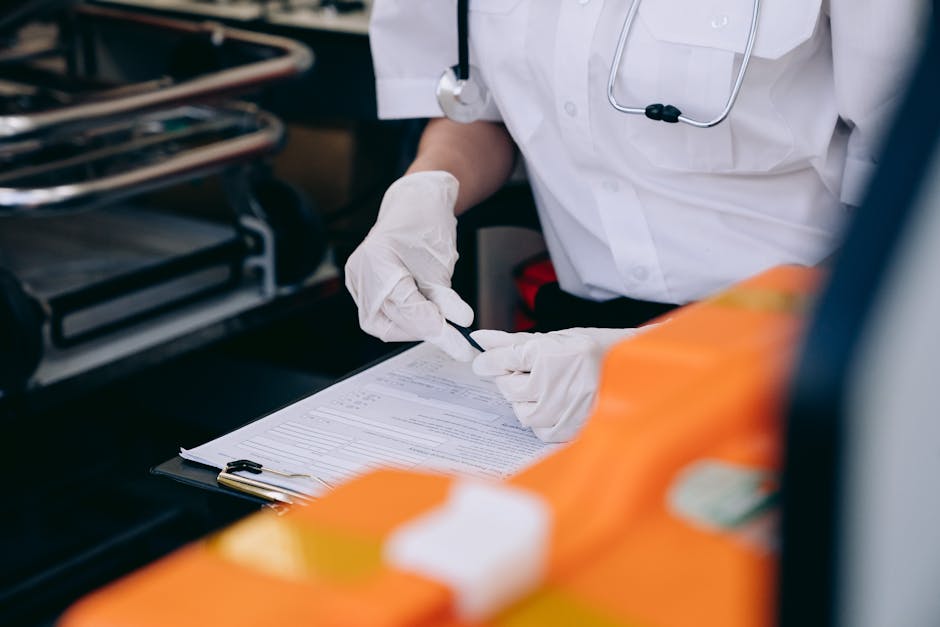
START has proven itself under the worst possible conditions, deployed during the 1995 Oklahoma City bombing and the response to the World Trade Center attacks, and it's now in active use across multiple California fire departments with the backing of the California Fire Chief's Association. That track record is part of why adoption tends to move fast once a department commits: the system already has the field validation most new protocols spend years building.
Practical Tips for Running START Triage Drills
A few habits separate departments that retain this skill from ones that let it fade between incidents.
- Run tabletop scenarios before every full-scale field exercise
- Standardize tag colors across every mutual-aid agency you work with
- Debrief immediately after each drill, while details are still fresh
- Keep JumpSTART protocols posted separately for school and daycare responses
- Refresh training annually rather than treating it as a one-time certification
- Track individual triage times to catch decision fatigue before it becomes a pattern
Questions about specific scenarios or certification requirements come up constantly in our classes, and most of the common ones are already answered on our FAQ page if you want a quick reference before your next drill.
START and SALT aren't competitors so much as two answers to the same hard problem, and understanding both makes you a sharper responder regardless of which one your department ultimately certifies on. What matters most isn't which acronym is printed on your training card. It's whether every responder standing on that scene, from the rookie to the incident commander, is reading the same signals the same way when it counts.

Recent Comments