
START Triage in Hospital Emergency Departments: Surge Planning
At 2:14 a.m. a charter bus rolls off I-95 with 38 people aboard. Twenty minutes later ambulances start radioing the receiving hospital, which has only 6 open beds. The ED triage officer has to decide, before the doors even open, whether this is a surge the department can absorb or one that requires activating the hospital's surge plan. Every second counts, and the decision framework used in the next ten minutes determines whether wounded get sorted into the right treatment tracks or whether the ED collapses under the weight of simultaneous arrivals.
That framework is START: Simple Triage and Rapid Treatment. Built originally for the chaotic scene, START gets a second life at the hospital's threshold during a mass-casualty event. When an ED hits a surge, staff re-sort every arriving patient into Immediate (red), Delayed (yellow), Minor (green), or Deceased-Expectant (black) at the doors before a single chart is opened. It's not the field tag that gets trusted; the tag is a starting point, nothing more. The trigger is usually a formal activation: a hospital incident commander stands up the Hospital Incident Command System, and in a large event the receiving facility may be operating under a county- or state-declared state of emergency that unlocks mutual aid and scope-of-practice waivers.
Most emergency departments run the 5-level Emergency Severity Index (ESI) triage for routine walk-ins. START is different. It only activates once patient volume outstrips normal throughput, and when it does, it replaces ESI at the door completely. The goal is 60 seconds or less per patient, so re-triage at the door does not itself become the next bottleneck. We cover this in more detail in our guide to hospital surge planning in more depth, but the core principle is straightforward: you need a system that is easy to learn, easy to remember, and easy to use.
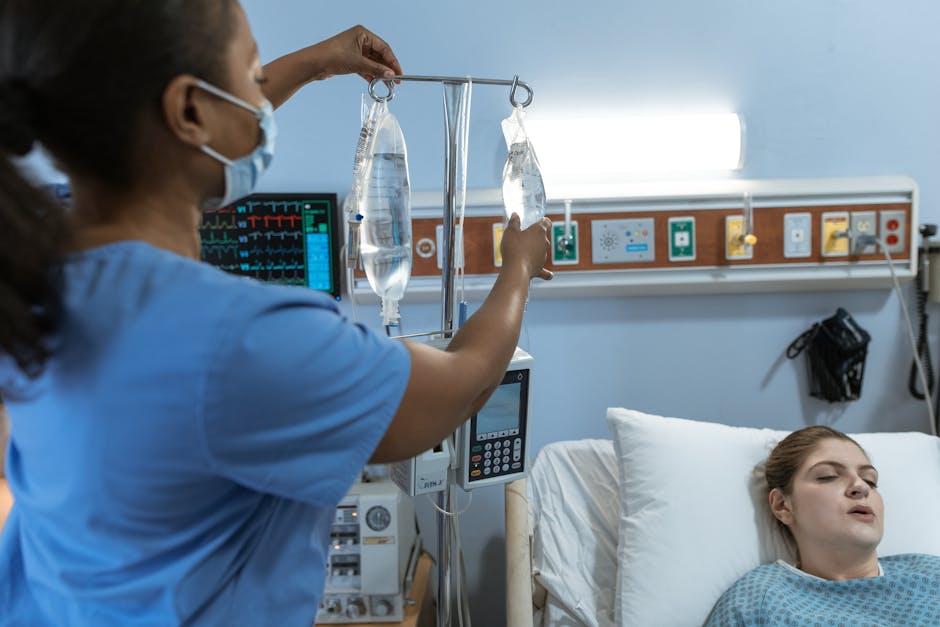
What is the surge protocol in a hospital?
Hospitals follow a standard sequence once a mass-casualty incident is declared. EMS or dispatch sends out the MCI notification. Within minutes, the hospital incident commander stands up the command center, the bed board gets reviewed for available space, and the staff recall list activates. A triage officer posts at the ambulance bay, ready to re-sort patients using START. This is not improvisation; it's a documented protocol that sits in the hospital's emergency operations plan and gets drilled regularly.
The framework that guides how hospitals stretch their resources is built around three tiers. According to CDC guidance on surge planning, hospitals plan for conventional capacity (normal staff, space, and supplies), contingency capacity (functionally equivalent care using adapted spaces or repurposed staff), and crisis capacity (care that departs from usual standards but is reasonable given the scope of the disaster). A concrete example: a 200-bed general hospital with a 30-bay ED might convert its same-day surgery unit into a 15-bed overflow ward within the first hour of a Level 1 activation, then move to crisis protocols by pushing patients into hallways and waiting areas if more space is needed.
The protocol explicitly protects time-sensitive services during a surge. STEMI activations, labor and delivery, and reproductive health services including emergency contraception continue on their normal pathway rather than being suspended. The surge affects throughput and bed availability, not the priority order of critical care pathways.
The actual sequence mirrors what happens in the field, but with hospital-specific steps. As we explain in our post on 911 dispatch triggering hospital notification, the receiving facility gets advance warning whenever possible, which shortens activation time significantly.
- EMS or dispatch initiates MCI notification to receiving hospital(s)
- Hospital incident commander formally activates HICS or equivalent command structure
- Command center established (typically in the ED or a dedicated ops room)
- Bed board reviewed and available surge space identified
- Staff recall list activated for off-duty personnel
- Triage officer positioned at ambulance bay to re-triage arriving patients using START
What are the stages of triage, and where does START fit in?
Searchers often run into conflicting information about triage "stages." Some sources describe four broad stages of the triage process itself: triage, treatment, evacuation, and reassessment. Others describe START's own five-step decision tree for sorting patients: ability to walk, breathing, respiratory rate, perfusion or pulse check, and mental status. The distinction matters because START is a sorting tool, not a treatment protocol.
First responders in the field and ED staff at the door use a single memorable device to move fast: the 30-2-Can Do rule. Respiratory rate over 30? Capillary refill or pulse check slow? Can the patient follow a simple command? These three rapid checks sort a patient into red, yellow, or green within 60 seconds or less. The system reduces decision fatigue under pressure because responders don't have to make diagnostic calls; they just run through the algorithm.
START sorts patients into categories; it does not diagnose or treat. That's why hospitals always pair START re-triage with a treatment and transport stage afterward. On arrival at the ED, patients don't get accepted at face value based on the field tag. They get run back through the same decision tree, because conditions change during transport. A yellow patient who was breathing fine in the ambulance might have developed respiratory distress by the time the ambulance doors open.

"START was developed in 1983 by Newport Beach Fire Department and Hoag Hospital and remains one of the most widely adopted mass-casualty triage systems in the United States."
As we explain in our post on why simple systems hold up under pressure, the strength of START is that it doesn't require fancy equipment or extensive medical knowledge. A firefighter, paramedic, or nurse can run it. That's why it's been adopted across California fire departments and beyond.
Retriage at the ED doors: why the field tag isn't final
The field triage tag reflects a patient's condition at minute zero. During transport, a patient can deteriorate or improve. A patient tagged as yellow with adequate breathing at the scene might be struggling by the time the ambulance reaches the receiving facility. That's why the ED triage officer re-runs START at the door rather than trusting the color already on the tag. Field tags provide continuity of care and help load-balance which patients go to which treatment track, but they are not final decisions.
The self-presenting patient problem complicates things further. Walking wounded often arrive by private vehicle ahead of the ambulances. The organized, memorable method falls apart if those patients walk straight into the main waiting room without being re-sorted. Most hospitals solving this problem post a re-triage checkpoint at the main entrance, not only at the ambulance bay, so every arrival gets the same rapid assessment.
Children present a different algorithm. JumpSTART is the pediatric adaptation of START, used for patients who appear to be 8 years old and under or roughly under 100 pounds. It uses a modified breathing and pulse-check sequence because children's normal vital signs differ from adults. When a regional event like an earthquake drives multiple pediatric patients into a receiving facility, staff need to switch to JumpSTART rapidly. Research shows that JumpSTART's pediatric-specific breathing and pulse checks have been studied and adopted as the standard companion to START for pediatric mass-casualty patients, so drills should train staff on both algorithms side by side.
Skipping re-triage and trusting the field tag is a documented cause of ED-side bottlenecks during real mass-casualty responses. Patients mislabeled at the scene can consume resources meant for higher-acuity patients, or higher-acuity patients can be deprioritized based on stale information.
What is surge capacity, and how do hospitals measure it?
Surge capacity is a hospital's ability to manage a sudden jump in patient volume beyond normal operations. It's measured across three dimensions: space (beds, hallways, waiting areas, converted units), staff (nurses, physicians, support personnel, and how their roles might be adapted), and supplies (medications, blood products, ventilators, personal protective equipment). A baseline of 30 ED bays might stretch to 45 or 50 at the contingency level using hallway beds and converted units. At the crisis level, a hospital might operate with 60 or more treatment positions using altered staffing ratios and reduced space per patient.
Surge capacity is not the same as a surge hospital. A surge hospital is a stood-up alternate care site such as a field hospital, converted convention center, or parking-structure tent hospital. The distinction is important: surge capacity is what a single facility can do internally. Once that capacity is exceeded, the region activates a surge hospital or diverts incoming patients to other facilities.
Many regional EMS systems use Surge Level 1, 2, or 3 designations that hospitals broadcast to dispatch to signal how much capacity remains before diversion becomes necessary. A Surge Level 1 signal tells dispatch that the ED still has capacity and can continue accepting patients. Level 2 and 3 escalate toward diversion and regional mutual aid activation.

"Surge capacity is defined as a health system's ability to expand rapidly beyond normal capacity to meet an increased demand for medical care during a disaster or mass-casualty event."
What do 'surge hospital' and 'surge level' mean?
A surge hospital is an alternate care site or field hospital, not the receiving ED itself. It gets activated once a local facility's surge capacity is exhausted. Examples include converted gymnasiums, parking-structure tent hospitals, cruise ships (historically), or repurposed office buildings. The staffing model for a surge hospital is typically lighter and less specialized than a traditional hospital ED; the goal is to provide basic urgent care and monitoring, not advanced trauma or surgical services.
Surge Level 1 typically signals the mildest activation tier. The hospital's internal resources are stretched, but no diversion of incoming patients and no mutual aid from neighboring facilities is needed yet. Level 2 escalates toward diversion of non-emergent patients to other facilities. Level 3 represents near-total saturation, with mutual aid and possible regional coordination of alternate care sites. These signals get broadcast to 911 dispatch and neighboring hospitals so incoming ambulances and self-presenting patients can be redirected before an ED is overwhelmed.
The numeric scale itself is not standardized nationally the way START's four color tags are. It varies by region and by the authority of the local EMS system. A Level 1 in one county might function differently than a Level 1 in another. This is why multi-agency drills that use a shared common language are critical for coordinating response across jurisdictions.
Who else needs to drill this: roles beyond the emergency department
The triage officer at the door is only one piece. A surge activation requires drills among far more roles. The hospital incident commander needs to know the protocol. Security staffing the triage checkpoint needs to enforce scene access so the triage officer isn't overwhelmed by family members. Registration and admitting staff handling rapid patient identification and Doe tagging need to know the workflow. Environmental services turning over beds and cleaning contaminated areas needs coordination. Chaplaincy and family-reunification staff need to know where to route arriving relatives.
Multi-agency coordination adds layers. The ED triage officer needs a shared radio channel or liaison with the fire/EMS incident commander so scene-side tags and transport decisions align with ED capacity. In an active-threat mass-casualty event involving law enforcement, we explain more about coordinating with law enforcement on scene, and that same coordination extends into the receiving hospital through clear radio protocols and incident command integration.
Workplace safety personnel and industrial safety coordinators should know the receiving hospital's surge terminology so scene-side tags match what the ED expects on arrival. School emergency coordinators should review local hospital surge protocols at least annually. The more that workplace and school staff understand the system, the faster decisions can be made when a real incident occurs.
The artifact that ties it all together is a written surge annex to the hospital's emergency operations plan. This annex documents the three surge tiers, the activation sequence, staffing roles, communication protocols, and re-triage procedures. It gets reviewed and drilled at least annually under most state hospital licensing requirements. A printed copy should live in the command center and copies should be posted in the ED, so information is not buried in a file cabinet when the surge hits.
Building the muscle memory: drills that keep surge START automatic
Knowing the protocol on paper is not enough. Responders need to drill it until the decision sequence becomes automatic. A recommended cadence aligns with common state and accreditation expectations: a tabletop exercise quarterly (talking through scenarios at a table), a functional drill twice a year with a real triage officer positioned at the door and real patient flow, and a full-scale exercise at least once a year with all roles activated and real-world constraints simulated.
Keep JumpSTART pocket cards and adult START flowcharts posted at both the ambulance bay and the main ED entrance. Do not file them in a binder inside the command center. When the surge hits, staff need instant visual reference, not time spent searching for documentation.
Time re-triage per patient during after-action reviews and flag anyone held over 60 seconds or less. This keeps the process fast rather than just documented. If the drill reveals that triage is slowing down mid-stream, the problem usually lies in staff handoff or missing supplies at the checkpoint, not in START itself.
Rotate the triage officer role among multiple charge nurses and physicians so the skill does not live with one person who might not be on shift when the surge hits. Each person who might fill that role needs to drill it at least once a year. Cross-training is insurance against the real surge happening on a day when your primary triage officer is on vacation.
- Tabletop exercise: quarterly, at a table, talking through a scenario without real patient flow
- Functional drill: twice a year, with a real triage officer at the door and simulated patient arrivals
- Full-scale exercise: at least once a year, with all roles activated and realistic constraints
- Documentation: write an after-action report after each drill, identify gaps, and track improvements over time
- Cross-training: ensure at least two staff members per key role can execute the protocol
- Supply checks: verify START cards, flowcharts, and triage tags are accessible and stocked before each drill
Schedule the next tabletop or functional drill this quarter rather than waiting for a real mass-casualty incident to test whether the surge annex actually works. The payoff is straightforward: knowing the hospital's surge tier, where retriage happens at the door, and who beyond the ED is trained turns a chaotic surge into an organized, memorable method the team already knows. When every second counts and wounded are arriving faster than beds can be freed, a system this easy to learn, easy to remember, and easy to use is what lets responders make the right call in 60 seconds or less. The difference between a rehearsed response and an improvised one is often the difference between managing a surge and being overwhelmed by it.

Recent Comments